For thousands of elderly people in remote communities, a smartphone screen or a telephone receiver becomes the only bridge to quality healthcare.
Geography as a Medical Diagnosis
Life in remote rural communities has its own specifics, where the distance to the nearest district center is measured not only in kilometers but also in the physical energy required to make the journey. The demographic situation in many such settlements remains difficult: a significant portion of the residents are people of advanced retirement age. For them, a routine trip to an endocrinologist or cardiologist turns into a serious ordeal that requires lengthy preparation, finding an escort, and significant financial expenses for transportation.
The logistics of a medical visit often look like an obstacle course. Scheduled buses do not run every day, and hiring a private car significantly hits the budget of a lonely elderly person. Add to this the poor condition of local roads, long waits in lines outside the offices of the district clinic, and general physical weakness. Because of these barriers, patients postpone planned examinations until the last minute, enduring discomfort and hoping for a temporary improvement in their well-being without the intervention of specialists.
Chronic diseases, such as hypertension or diabetes, do not forgive pauses in monitoring. They require constant attention, regular measurement of indicators, and timely changes in medication dosages according to the body's current state. When a physical trip to the doctor becomes impossible, pensioners are often left alone with their symptoms. The practice of exchanging medicines with neighbors or using outdated prescriptions for years leads to irreversible consequences for their health.
The lack of professional outpatient support inevitably leads to critical exacerbations. Instead of adjusting the dose of blood pressure pills during a scheduled consultation, a person's condition deteriorates to a hypertensive crisis. Then the only way out is to call an ambulance, which is forced to navigate the same broken roads, losing precious time needed to save the patient's life.
The Yellow-Blue Foundation is actively working on the problem of access to medical services. Our comprehensive rehabilitation program includes telemedicine services, providing continuous medical supervision for vulnerable categories of the population. This allows us to support patients in de-occupied and remote communities, guaranteeing them professional support without the need for exhausting trips to medical centers.
A New Culture of Medical Support
Remote communication transforms medicine from reactive to preventive, where a crisis is easier to prevent with a single conversation than to treat in a hospital.Yellow-Blue Editorial Team
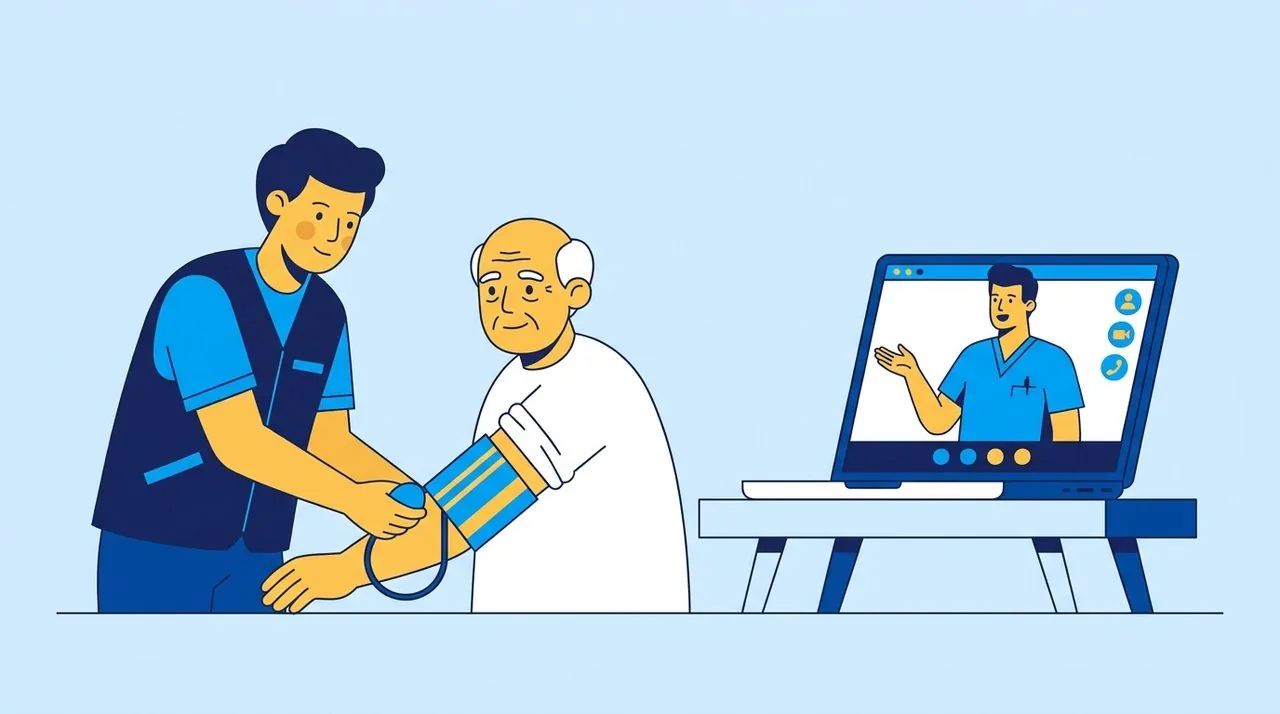
The introduction of remote consultations radically changes the approach to treating and supporting the older generation. The process becomes routine, safe, and calm. At an appointed time, the patient contacts a specialist via video link or a regular phone call. During such a session, the doctor analyzes the blood pressure or glucose level diary, asks in detail about the patient's well-being, checks the effectiveness of previously prescribed medications, and, if necessary, carefully adjusts the therapy. It takes little time but is crucial for stabilizing the condition.
An important aspect of telemedicine is the involvement of local nurses or social workers. In cases where an elderly person does not have a smartphone or does not know how to use one, it is the social worker who organizes the communication session with the doctor during their visit. Such a hybrid approach makes it possible to reach even the least digitized segments of the population, providing them with equal access to qualified medical expertise.
In addition to purely clinical benefits, regular remote consultations play a significant psychological role. Elderly people in remote villages often suffer from deep social isolation and a feeling of abandonment. Scheduled contact with a medical professional gives them a sense of security and confidence that their health is being cared for. The background anxiety associated with the inability to get advice here and now disappears, which in itself has a positive effect on the nervous system and the overall well-being of patients.
Remote monitoring also disciplines the patients themselves. Knowing that they will have a conversation with the doctor next week, pensioners take a more responsible attitude toward daily blood pressure measurements and taking their medication. They start keeping records and noting changes in their condition, becoming active participants in their own treatment process rather than just passive recipients of medical services during emergency calls.
The gradual integration of telemedicine solutions into the daily lives of vulnerable communities helps preserve the most valuable thing—the quality of life of the elderly. Providing continuous medical supervision from a distance proves that geographical isolation should not mean giving up basic rights to health and a dignified old age.