
The lack of gas forces people to look for alternatives, but the forests hide a deadly threat for local residents.
October 2025 brought the first severe cold, which once again served as a reminder of the extreme vulnerability of infrastructure near the line of contact. In many de-occupied and frontline communities, centralized heating and a stable gas supply remain unavailable. Thousands of kilometers of pipes, distribution stations, and mainlines have suffered critical damage. For residents who stayed in their homes or returned after the territories were liberated, solid fuel is once again the only available source of heat this winter.
Historically, rural areas have always had a reliable backup plan for any energy supply disruptions: firewood. From generation to generation, winter preparations began well in advance, accompanied by trips to local forest strips, pruning of old orchards, and gathering brushwood. Today, however, this familiar autumn routine has undergone fundamental, tragic changes. The surrounding forests, windbreaks, roadsides, and even abandoned agricultural lands are heavily contaminated with explosive objects.
Gathering firewood is no longer just a matter of hard physical labor; it has turned into a deadly lottery. According to experts, a significant portion of the woodlands in the affected regions remains unchecked. Quite logically, the priority for sapper units is power lines, main transport arteries, and key agricultural lands. Forests, on the other hand, will remain risk zones for many years to come.
Local residents find themselves in a paradoxical and terrifying situation: the lifesaving fuel literally grows a few hundred meters from their yards, but access to it is strictly forbidden. Any attempts to gather brushwood or chop down a dry tree on their own regularly lead to irreparable tragedies. Tall autumn grass and fallen leaves reliably conceal butterfly mines, unexploded submunitions, and the thin threads of tripwires.
The usual preparation for winter has turned into a life-threatening risk, where every step into the forest strip could be the last.Yellow-Blue Editorial Team
The trap of infrastructural isolation and the logistics of rescue
Severed communications
Restoring the gas supply requires a major overhaul of the mainlines. Until the adjacent territories are completely demined, this is technically impossible, leaving communities in energy isolation indefinitely.
Mined forest strips
Instead of the usual firewood gathering, villagers face mines and tripwires. Forests, ravines, and roadsides remain zones of the highest danger for the civilian population, making independent heating impossible.
Under the conditions of such severe infrastructural isolation, providing alternative fuel becomes a matter of basic physical survival. The complexity of the situation is caused not only by the lack of safe forests but also by the specific demographic composition of frontline villages. For the most part, those who remain are the very elderly, lonely pensioners, large families, and people with disabilities. These are precisely the most vulnerable categories of citizens who are physically unable to chop firewood themselves, even if access to it suddenly became safe.
Every trip for firewood turns into a test of psychological resilience. Local residents talk about how they walked the same paths for years and knew every tree, but now these paths have become deadly traps. Unexploded ordnance remnants can lie under a layer of soil, waiting for the slightest pressure. For a civilian, recognizing such a threat is almost impossible. People freeze in their own homes with the forest right before their eyes, but guided by the instinct of self-preservation, they are forced to stay in the cold.
The economic dimension of the problem is no less dramatic. Commercial firewood suppliers often refuse to travel to remote settlements due to destroyed roads, broken bridges, and constant general danger. Those entrepreneurs who do agree to deliver the cargo set prices that, taking logistical risks into account, are absolutely unaffordable for local residents, whose income is often limited to social benefits.
Consequently, humanitarian support is forced to evolve and transition from targeted aid to building complex, systemic fuel logistics. It is necessary not just to find fuel, but to physically bring a safe, ready-to-use heat source directly to the yard. The autumn off-road conditions make this process even more difficult, requiring the use of off-road vehicles and careful planning of every trip.
Fuel briquettes have proven to be the most effective and viable alternative to traditional firewood in such extreme conditions. They have a significantly higher heat output and burn longer, ensuring a stable temperature in the house. In addition, they take up much less space, which is critically important for storage in outbuildings damaged by shelling or in temporary shelters.
Most importantly, briquettes do not require any additional processing. They do not need to be sawed or chopped. The packages are convenient to unload and carry, making this type of fuel ideal for elderly people who lack the physical strength for daily work with heavy logs. Only a transparent mechanism for distributing and verifying recipients can guarantee that the always-limited resources will reach the least protected segments of the population.
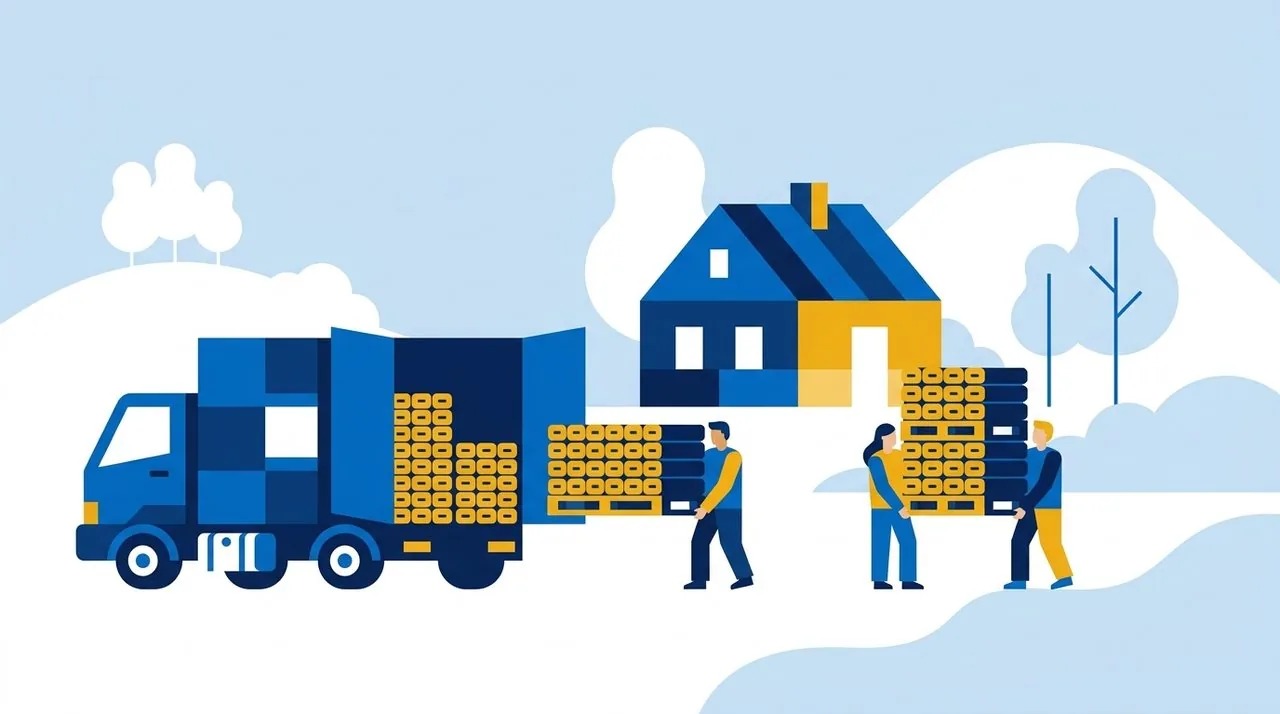
The humanitarian logistics program of the Yellow-Blue Foundation purposefully works with the challenges of the heating season, focusing on providing vulnerable households with fuel briquettes. We have built a multi-level system that guarantees strict accounting and absolutely transparent distribution of aid on the ground. Thanks to this program, residents of frontline villages receive safe, ready-to-use fuel directly at their place of residence. This not only brings heat to their homes but also completely eliminates the need to risk their own lives looking for firewood in mined forest strips.