
Summer fires in ecosystems have become a deadly trap due to the dense mining of Ukrainian forests and the impossibility of ground firefighting.
A disaster multiplied by an explosive threat
Mid-summer 2025 brought prolonged periods of extreme heat to Ukraine. Dry grass, coniferous litter, and fallen trees have turned forest areas into an ideal environment for the rapid spread of fire. A single spark, a dry thunderstorm, or a kinetic strike from another shelling is enough to provoke a massive ground fire. In peacetime, such incidents were promptly localized by forestry and rescue services. Today, however, rescue algorithms shatter against an invisible threat hidden beneath a layer of ash and soil.
Vast areas of forests in de-occupied and frontline communities remain critically contaminated with explosive objects. Tripwires, anti-personnel mines, abandoned ammunition, and unexploded artillery shells make any movement outside verified asphalt roads deadly. When fire engulfs such a territory, an uncontrollable chain reaction occurs. High temperatures cause hidden munitions to detonate. The forest turns into a zone of chaotic explosions, where shrapnel slashes trees, and blast waves only fan the flames, spreading them to new areas.
For fire crews arriving at the scene, the situation looks hopeless. Driving a fire truck deep into a burning forest or sending people with backpack fire extinguishers is impossible — the risk of losing personnel is one hundred percent. Rescuers are forced to stay at a safe distance, watching the disaster destroy the ecosystem, and wait until the fire reaches natural or artificial barriers. But the wind often changes direction, creating a direct threat to civilian settlements located right next to the forest belts.
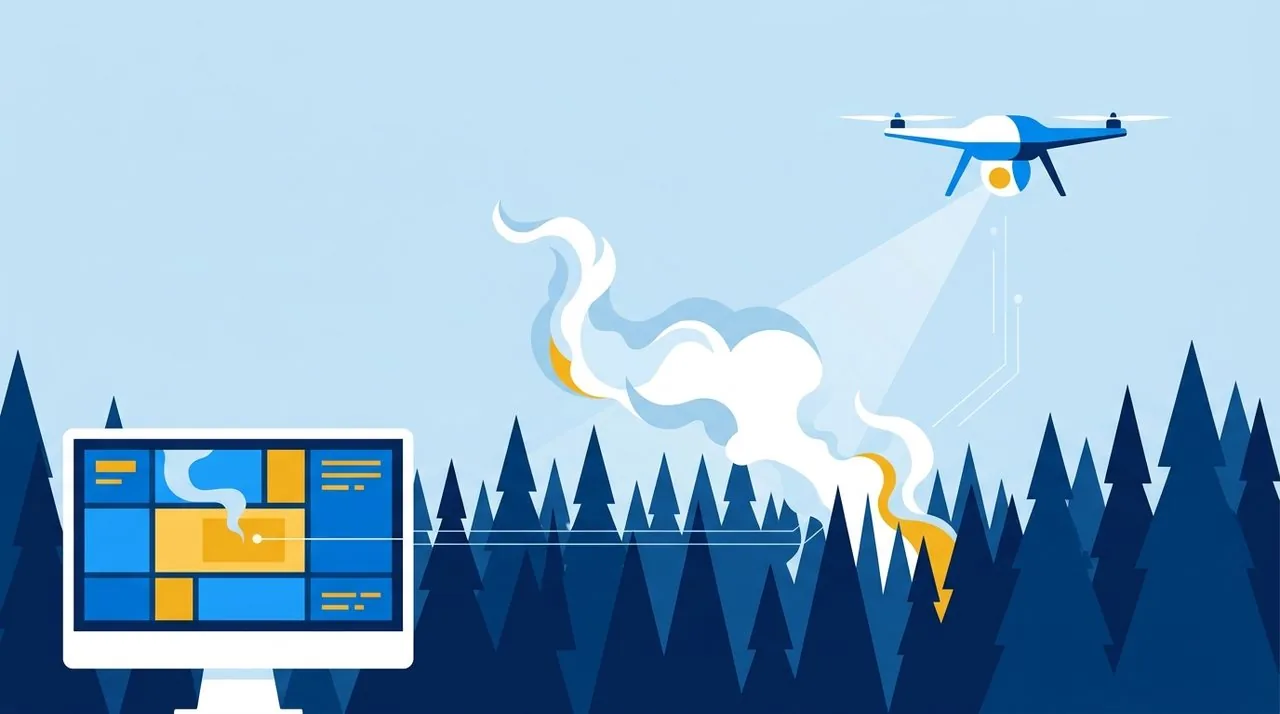
In response to this crisis, the Yellow-Blue Foundation is actively deploying remote ecosystem monitoring programs. Our teams use drones equipped with thermal imaging cameras for thermal inspection of forest areas. This allows rescue services to see the real scale of the fire, the direction of the fire's movement, and hidden smoldering hotspots from the air, planning localization without risking the lives of personnel.
Aerial control instead of ground risk
When the ground becomes inaccessible due to mines, the sky remains the only safe space for assessing the threat.Yellow-Blue Editorial Team
Thick smoke is the second main enemy after mines. It blinds ground observers and makes standard optical cameras or satellite images ineffective for making quick tactical decisions. When a coniferous forest burns, the smoke screen can stretch for kilometers, completely hiding the front line of the fire. This is where thermal monitoring technology changes the rules of fighting the disaster, allowing us to look through the dense, smoke-filled space.
A drone with a radiometric thermal imaging camera, rising above the forest, records temperature gradients. Where conventional optics see only a solid gray wall, the thermal imager clearly outlines the active fire line in bright orange and red colors against a cooler background. Operators receive the exact coordinates of the epicenter, the speed of the flame's advance, and record pinpoint smoldering hotspots that could flare up with renewed vigor from a gust of wind. This data is transmitted in real time to the coordination headquarters of the rescue services.
With such aerial reconnaissance, engineers and firefighters can act proactively. Instead of blindly waiting for the fire, they use heavy equipment to create mineralized firebreaks on safe, already demined lines — for example, along agricultural lands or dirt roads near villages. They meet the disaster where the ground is clear of explosives. This approach not only saves the lives of those who eliminate the consequences of disasters every day, but also minimizes the destructive impact on the infrastructure of de-occupied communities trying to restore normal life.