
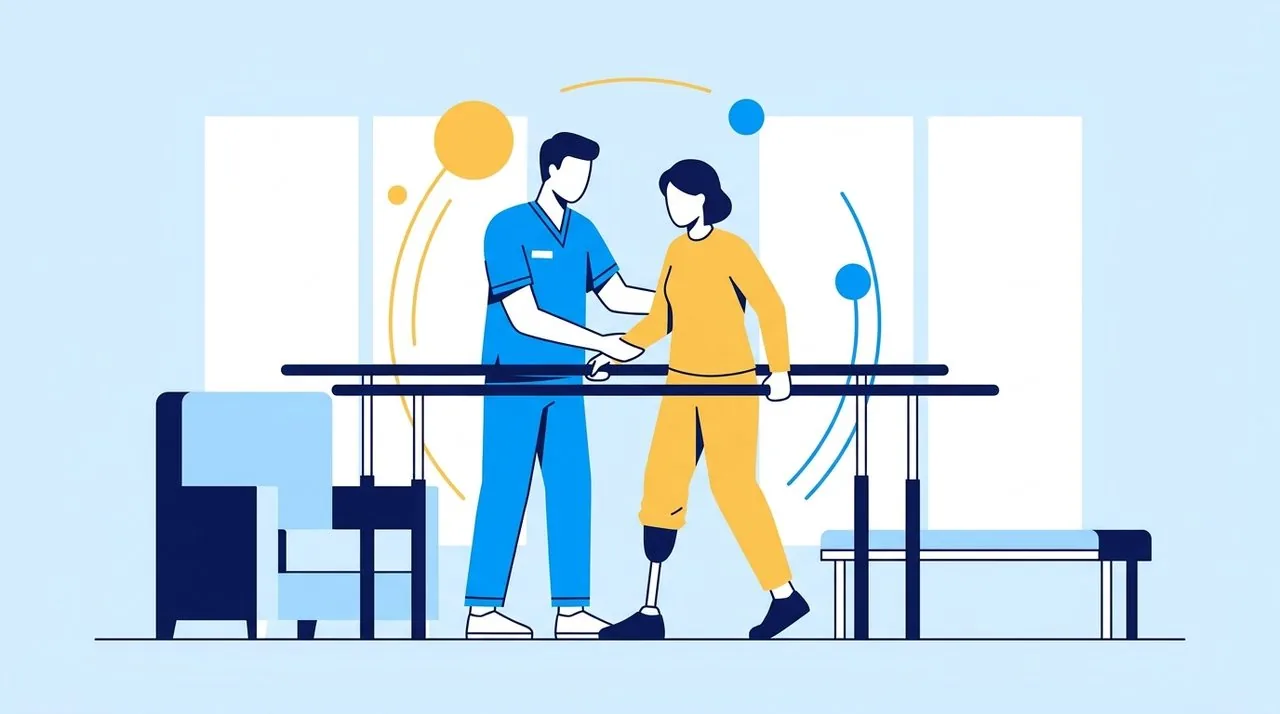
The journey after a severe injury begins with comprehensive physical and psychological support.
A New Reality: From the Hospital Bed to the First Steps
The loss of a limb or sustaining a polytrauma instantly changes the normal course of a person's life. After the acute medical intervention phase, when doctors save lives and stabilize the condition, a long and often exhausting period of preparing the body for new functioning conditions begins. This stage is critically important for both veterans and civilians affected by hostilities. Successful prosthetics is impossible without proper tissue healing, stump formation, and the restoration of overall muscle tone, which rapidly decreases during prolonged bed rest.
The physical rehabilitation process begins in the intensive care unit. Physical therapists work on preventing contractures—limitations in joint mobility that can make the future use of a prosthesis impossible. Simultaneously, work continues on the respiratory system and cardiovascular endurance. For a person who has lost a body part, even a simple change of position requires retraining the vestibular system and forming new neural connections to maintain balance.
A significant challenge at this stage is phantom pain—a specific pain syndrome in the lost limb, which, according to experts, affects the vast majority of patients with amputations. Overcoming this condition requires a multidisciplinary approach, including medication, mirror therapy, and constant psychological support. The patient must accept the changes in their body, overcome depressive episodes, and find the internal motivation for daily, often monotonous and painful training.
When the body is ready, the initial prosthetics stage begins. Learning to walk on a lower limb prosthesis or use a bionic arm is a complex biomechanical process. A person relearns how to distribute weight, feel the surface, and calculate effort. Every step at this stage requires maximum concentration and constant correction from rehabilitation specialists and prosthetists, who adjust the device to the individual characteristics of the gait.
The Yellow-Blue Foundation systematically supports the recovery process of victims. We finance physical rehabilitation programs for veterans and civilians, providing access to necessary procedures, professional guidance from therapists, and high-quality preparation for prosthetics. Our goal is to help every patient navigate this difficult path and return to the most independent, fulfilling life possible.
Socialization and the Return to Independence
A prosthesis is just a tool; true recovery happens when a person reintegrates into society and regains their everyday independence.Yellow-Blue Editorial Team
The medical aspect of the injury is only part of the overall picture. Even the most modern prosthesis does not solve all problems if the surrounding environment remains full of barriers. That is why occupational therapists are essentially included in multidisciplinary teams. Their task is to adapt the surrounding space to the person's new needs and teach them to perform routine activities independently: from cooking and dressing to driving a car and returning to the workplace.
Returning home often becomes a significant source of stress for patients. The familiar space suddenly proves inconvenient: narrow doorways, a lack of handrails in the bathroom, high stairs in the entrance. Adapting a home requires time and resources, and it is at this stage that support from the community and social services is extremely important. For civilians, who often lose not only their health but also their property or jobs, this period is particularly vulnerable.
In addition to physical barriers, people with amputations face daily stigmatization and society's unpreparedness for proper communication. The stares of passersby, inappropriate questions, or excessive pity can cause serious psychological trauma. Forming a new culture of interaction based on respect and equality is the shared responsibility of the entire society. Inclusivity must become not just a declarative concept, but a fundamental principle for developing infrastructure, educational, and workspaces.
Long-term rehabilitation also requires an understanding that a prosthesis needs regular maintenance, replacement of sockets due to changes in tissue volume, and routine repair of mechanical components. This means that a person remains tied to the medical and social support system for many years. Building an effective and transparent patient pathway, where every stage—from evacuation to lifelong support—is logical and clear, remains one of the main challenges for the healthcare system and social policy.