
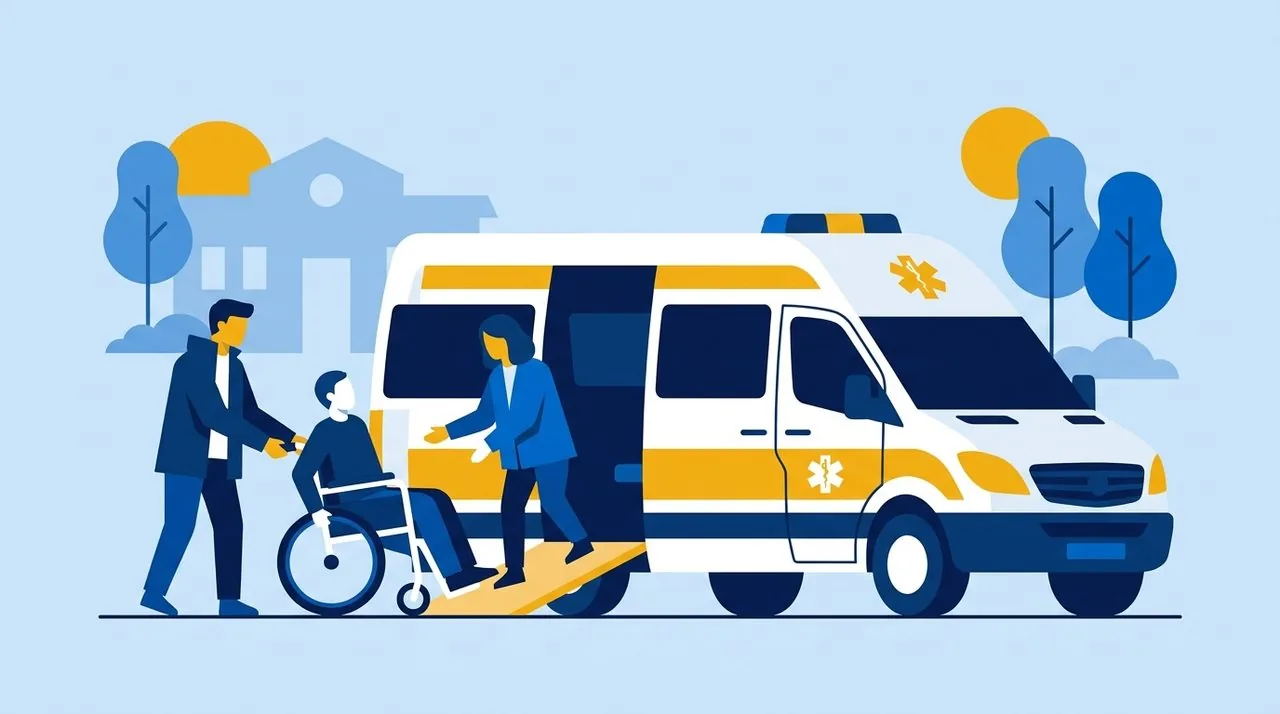
Organizing the departure of people with limited mobility requires specialized transport and medical escorts, making every trip a unique humanitarian operation.
Evacuation from territories under constant shelling is always a complex logistical task. However, when it comes to people with disabilities, standard rescue algorithms often prove ineffective. A regular bus or car cannot accommodate a medical stretcher or a specialized wheelchair. The lack of a stable power supply complicates, and sometimes makes impossible, the use of vital medical equipment, while destroyed infrastructure makes usual routes impassable for fragile medical transport. According to estimates by humanitarian missions, thousands of people with varying degrees of disability remain in high-risk zones. They are often physically unable to leave their homes on their own or even go down to a shelter during air raid alerts.
Physical limitations are inevitably accompanied by deep psychological stress. People who have relied for years on an established routine and the help of social workers or neighbors suddenly find themselves in complete isolation. The loss of a familiar environment for a person with visual impairments or on the autism spectrum becomes an additional traumatic factor, requiring evacuation teams to have not only physical strength but also specific communication and calming skills. Furthermore, the situation is critically complicated by the loss of communication. Families often find themselves separated by the front line or by disruptions in mobile network operations. Finding relatives who could take care of an evacuated person turns into a separate, extremely difficult task for coordinators.
Evacuating a person with a disability is not just movement through space; it is complex logistics where every minute has a medical and humanitarian dimension.Yellow-Blue Editorial Team
Barriers on the Path to Safe Territories
Transportation Specifics
Transportation requires vehicles with tail lifts, oxygen concentrators, and reliable restraints. Regular transport poses a risk of injury for people with severe musculoskeletal disorders.
Loss of Social Ties
Due to communication disruptions, evacuation teams often cannot find relatives who are guaranteed to meet and take in a person with limited mobility upon their arrival in a safe region.
The rescue process does not end the moment a specialized vehicle leaves the danger zone. Upon arriving in relatively safe communities, evacuees require immediate placement in adapted conditions. Transit hubs and temporary shelters are often overcrowded, and not all of them are equipped with ramps, accessible sanitary facilities, or have on-duty medical staff. This creates a serious barrier in the entire evacuation chain, as a person cannot simply be dropped off and left behind—they need a continuous cycle of care and support.
Humanitarian organizations face a constant challenge in properly allocating resources on the ground. Anti-bedsore mattresses, specific medications, adult hygiene products, and mobility aids are in constant shortage. Without a centralized system for recording these needs, assistance can be delayed, directly affecting the health and dignity of rescued individuals. Coordinating such resources is just as vital as the physical evacuation from the combat zone itself. Every functional bed or walker must be precisely matched to the individual needs of a specific person, which requires careful accounting and rapid response to requests from placement locations.
The Yellow-Blue Foundation actively supports the rescue process through its own humanitarian logistics program. We help maintain a systematic record of needs and coordinate the distribution of specialized equipment for evacuees. This allows us to promptly provide people with limited mobility with wheelchairs, medical beds, and other necessary equipment immediately upon their arrival in safe communities, easing the adaptation process.