
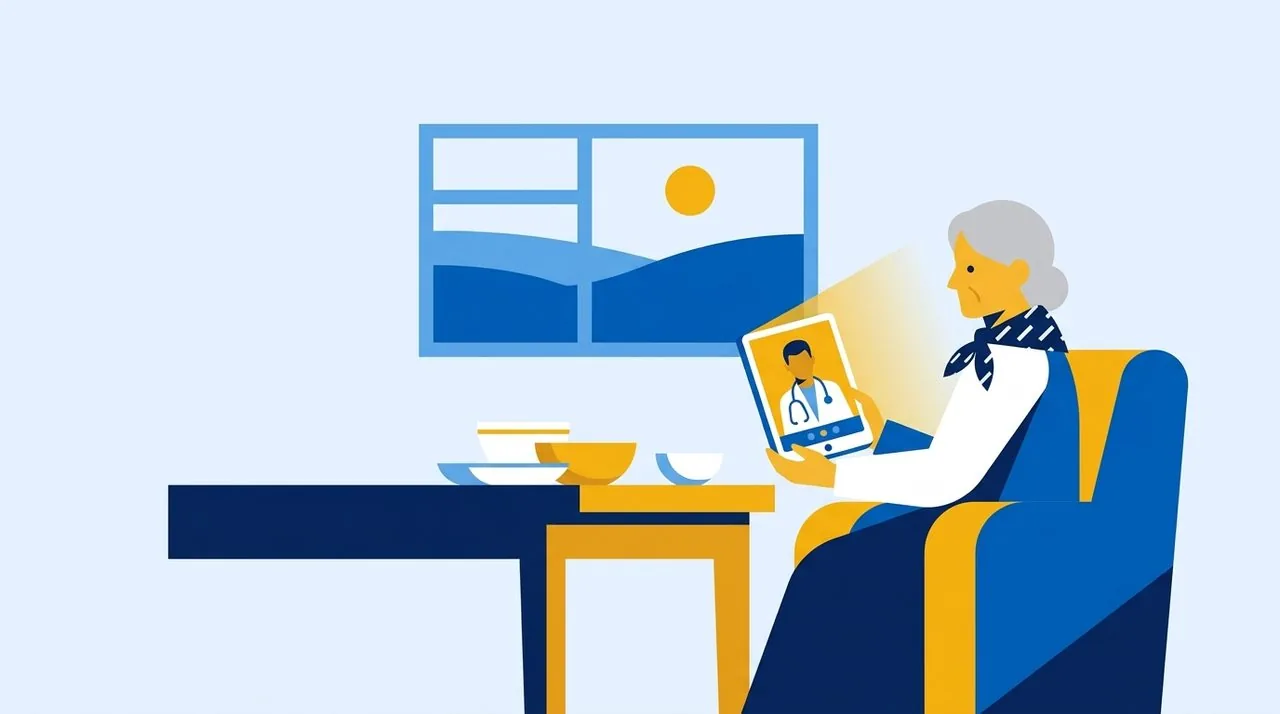
For thousands of Ukrainians in remote communities, a smartphone screen has become the only access to qualified medical care.
The physical accessibility of basic medical services remains one of the greatest humanitarian challenges for territories affected by hostilities and deep rural areas. When the local clinic is destroyed or damaged, and the only family doctor has been forced to leave the community, thousands of people find themselves in conditions of total medical isolation. Under such circumstances, even a mild ailment can turn into a critical problem, and managing chronic diseases becomes an almost impossible task.
The lack of timely diagnostics and regular medical supervision hits the most vulnerable categories of the population the hardest: the elderly, patients with limited mobility, people with disabilities, and families with small children. For most of them, a trip to the nearest surviving district or regional center turns into an exhausting, expensive, and sometimes physically impossible expedition. Infrastructure destruction cuts off entire villages from their usual routes of survival.
In this harsh reality, the concept of remote medical services radically changes its purpose. A video call to a doctor ceases to be just a convenient digital service for residents of large cities saving time on a trip to the clinic. Instead, it turns into an indispensable life-saving tool, the only bridge between an isolated patient and the professional healthcare system.
Destroyed Clinics and the Logistics of Survival
Rural medicine faced a noticeable shortage of personnel even before the start of full-scale hostilities, but now the situation has reached truly critical proportions. According to analysts, in some de-occupied and frontline areas, the shortage of medical personnel has reached catastrophic levels. Local residents often go for years without even basic preventive examinations. They are forced to ignore alarming symptoms of hypertension, diabetes, cardiovascular, or gastroenterological diseases because there is simply no one to turn to for advice for dozens of kilometers around.
Logistical hurdles only deepen this crisis, turning geographical remoteness into a death sentence. Destroyed bridges, road surfaces damaged by heavy machinery, mined roadsides, and a complete lack of regular public transport make a visit to the hospital a highly complex task. The cost of private transportation or hiring a car in such regions is often unaffordable for pensioners, whose budget barely covers basic food needs. By postponing a visit to the doctor "for later," patients allow their conditions to worsen to the point where only emergency hospitalization can help.
In such conditions, telemedicine offers an alternative patient route that does not require physical movement along dangerous or broken roads, yet guarantees contact with a specialist of the required profile. Instead of looking for transport and spending a whole day on the road, a person can receive qualified help from a general practitioner, neurologist, cardiologist, or endocrinologist while remaining within their settlement.
The Yellow-Blue Foundation is actively developing telemedicine for de-occupied and cut-off communities. We ensure the organization of technical communication between patients in remote villages and qualified doctors from safe regions. As part of our programs, communities receive the necessary equipment for access points, allowing people to receive professional consultations, electronic prescriptions for vital medicines, and continuous management of chronic diseases without the risks associated with long trips.
From Initial Examination to Long-Term Rehabilitation
In practice, the model of remote consultations in remote villages often relies on local nurses, paramedics, or even specially trained social workers who act as guides into the world of digital medicine. Equipped with an internet-connected tablet (often via satellite communication systems in special hubs) and basic diagnostic devices such as a blood pressure monitor, pulse oximeter, and glucometer, they help the patient connect with a doctor. The specialist on the screen collects a detailed medical history, assesses the general condition through the camera, analyzes the reported vitals, and makes an informed decision regarding the further treatment protocol.
In addition to primary care, remote rehabilitation and psychological support are becoming extremely important areas. Patients who have suffered strokes, severe injuries, or surgeries require long-term and regular supervision by physical therapists. Through high-quality video calls, specialists can monitor the correct execution of motor exercises, adjust the individual recovery program, and provide necessary recommendations to relatives caring for the patient. This allows the critically important rehabilitation process to continue without interruption due to the inability to constantly travel to a specialized center.
Mental health is another area where a smartphone or laptop screen performs a lifesaving function. People who have survived the traumatic experience of occupation or are constantly under stress due to proximity to the combat zone rarely dare to seek a psychologist in another city. An anonymous, safe, and accessible conversation with a mental health professional in familiar surroundings often becomes the first step toward overcoming deep trauma and depressive states.
The deep integration of telemedicine tools with the national e-health system makes this format a full-fledged, legally significant medical process. Directly during the online appointment, the doctor can issue an electronic prescription for medications under the "Affordable Medicines" program or create an electronic referral for additional laboratory tests if the patient eventually finds a way to reach the nearest city. Such a comprehensive system not only saves people from acute conditions here and now but also returns people from remote villages to the nationwide medical space, giving them the feeling that they have not been forgotten.
Digital technologies in medicine have proven their ability to erase geographical barriers precisely when physical access to a doctor has become a matter of survival. Yellow-Blue Editorial Team