
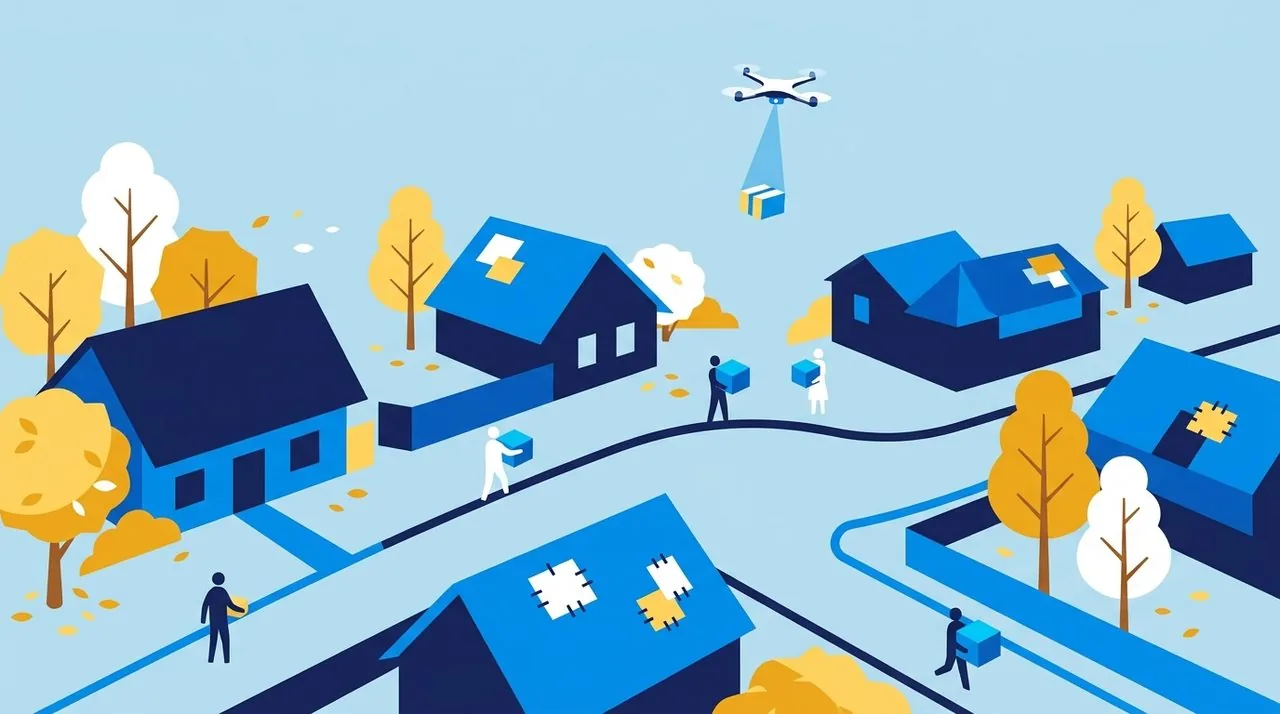
As soon as the temperature drops, time becomes the main enemy for the residents of damaged houses.
Mid-October brings to frontline communities not only cold winds and lingering rains, but also an acute realization of approaching winter. For settlements that regularly suffer from shelling or have recently experienced de-occupation, the change of season means a radical shift in humanitarian priorities. While access to drinking water and basic food remained key needs in the summer, preserving housing now takes the top spot. The concept of the "thermal envelope" becomes decisive for the survival of entire streets and villages.
A building's thermal envelope is its basic physical ability to retain heat, provided by an intact roof, undamaged windows, and tightly sealed doors. Blast waves and shrapnel breach this integrity in seconds. Even if the load-bearing walls of a house remain standing, the absence of roofing slate or shattered glass renders the home unfit for wintering. According to experts, tens of thousands of households along the contact line are entering this autumn-winter period with a partially or completely destroyed thermal envelope.
The physics of destruction works relentlessly. An open roof means that the very first serious precipitation falls onto wooden floors, clay, or drywall ceilings. Water soaks the walls, destroys the remaining belongings, and creates an ideal environment for black mold. When the frosts hit, the moisture in the structures will freeze and literally begin to tear the building materials apart from the inside. A house that could have been saved in September with a few sheets of OSB and a special tarpaulin can turn into an unsalvageable, hazardous ruin by spring.
That is why building materials for quick repairs are now the main currency of survival. Boards, nails, mounting foam, thick plastic sheeting, corrugated metal sheets, and OSB boards are needed in colossal volumes. Local residents, who are mostly elderly, categorically refuse to leave their homes, citing their attachment to the land and their homesteads. Accordingly, the task of humanitarian missions and local authorities is not so much to persuade them to evacuate, but to provide the tools to preserve the housing that is still standing.
Speed of Response
Every day without a roof exponentially increases the damage. Promptly covering it with plastic sheeting or tarps buys a few months to find resources for major repairs.
Material Logistics
Delivering bulky cargo, such as round timber or roofing slate, is complicated by broken roads. Transportation requires special equipment and careful route planning.
Shortage of Craftsmen
Villages lack physically strong people to carry out high-altitude work. Even with materials available, it is practically impossible for an elderly person to cover a roof on their own.
Risk of Dampness
Improperly or loosely sealed windows lead to constant drafts and the inability to heat a room, even if there is an adequate supply of firewood or coal.
From Visual Assessment to Actual Materials
The process of restoring the thermal envelope begins long before a truck with building materials drives into the village. For international donors, state programs, or humanitarian organizations to allocate aid, the community must provide accurate data. Bureaucratic procedures demand clear answers: exactly how many square meters of roofing are damaged, what are the dimensions of the window openings, and what is the degree of destruction to the rafter system. Without these figures, it is impossible to formulate an adequate request.
The traditional method of bypassing every yard by a commission with a tape measure and paper acts takes weeks. Furthermore, in frontline zones, this is often accompanied by the risk of stumbling upon unexploded ordnance in yards or getting injured due to the collapse of unstable structures. There is simply no time for slow paperwork as the frosts approach. Communities need a tool that allows them to quickly digitize the scale of the disaster and turn a visual tragedy into a structured dataset for benefactors.
The Yellow-Blue Foundation is actively working on this problem, providing regular aerial monitoring of frontline territories. Using drones, the foundation's specialists carry out quick and safe documentation of roof and facade damage. The collected orthophotomaps and detailed high-resolution images are handed over to local communities. This allows them to promptly draw up defect reports and formulate accurate requests to partners for the purchase of building materials, without wasting precious time on manual measurements.
This approach radically changes the speed of attracting aid. When a community comes to a donor not just with a request saying "we need materials," but with a detailed map of the damage, exact areas of shattered roofs, and photographic documentation of each object, the level of trust and the speed of decision-making increase manifold. Technology makes the process transparent and logistics as targeted as possible. Instead of approximate shipments of cargo, the village receives exactly as many sheets of roofing slate or rolls of plastic sheeting as are necessary for specific houses.
Preparing for winter in territories affected by hostilities is always a race against the weather. The winners in this race are the communities that are able to assess their own needs, document the damage, and communicate it to the world the fastest. And although there are still many challenges ahead related to finding labor and distributing fuel, a sealed building envelope remains the basic foundation upon which the hope for a safe wintering rests.
To preserve a house's thermal envelope in autumn means to preserve the life of the community in winter.Yellow-Blue Editorial Team