
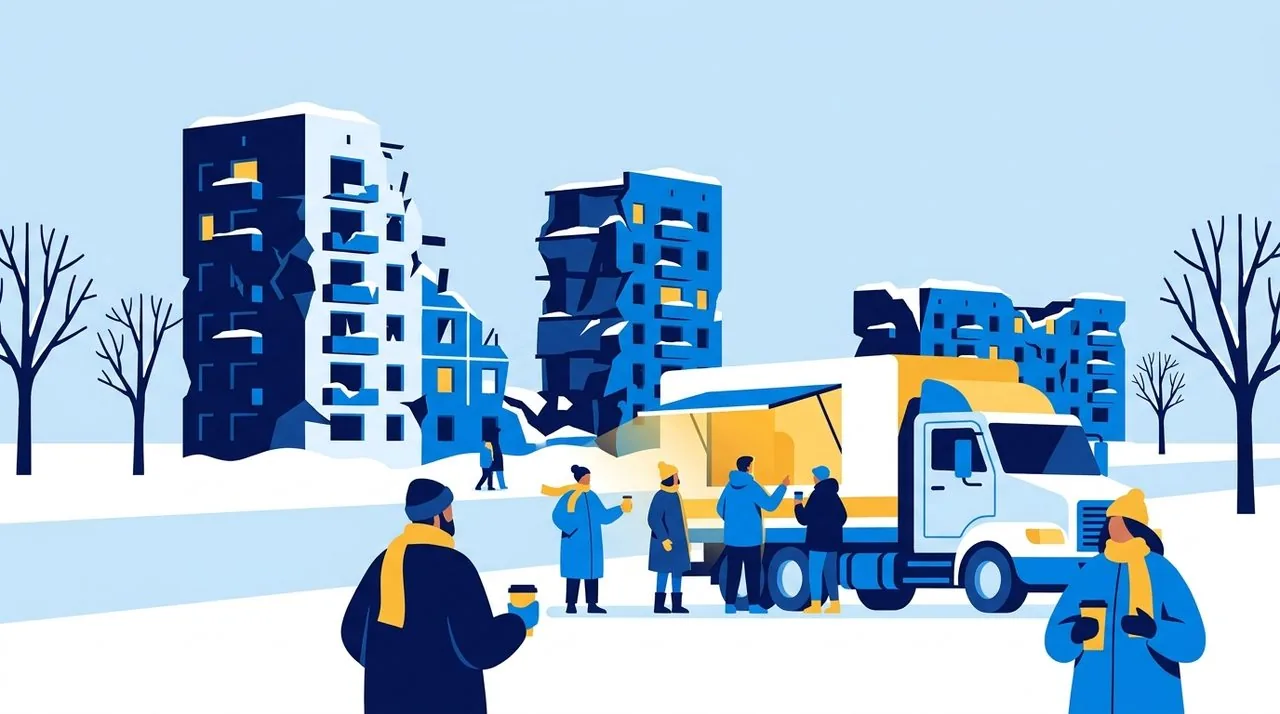
Winter on the contact line has turned into a daily struggle to preserve basic heat in half-destroyed buildings.
January brought to Ukraine not only traditional seasonal frosts but also another aggravation of the humanitarian situation in frontline regions. Systematic strikes on critical infrastructure facilities repeatedly leave entire neighborhoods and settlements without electricity, water, and central heating. For the people who remain in their communities despite the constant danger, the daily routine has been reduced to a continuous search for ways to stay warm. When combined heat and power plants and local boiler houses suffer critical damage, the temperature in apartment buildings drops rapidly, often matching the temperature outside.
In such conditions, the urban space transforms. Life moves from spacious apartments to cramped basements, which serve simultaneously as shelters from shelling and the only place where at least some heat can be preserved thanks to potbelly stoves and the crowding of people. Those who remain in their homes are forced to adapt their daily lives to extreme conditions: sleeping in outerwear, cooking food on camping gas burners, and looking for alternative heating sources. According to local administrations, restoring full heat supply in some communities is impossible until the end of the heating season due to the scale of the destruction.
Daily Life on the Brink of Freezing
Life in cities directly bordering the active combat zone dictates strict rules of survival. When centralized utilities are absent for weeks, Points of Invincibility and public heating tents become the basic centers of social life. This is exactly where civilians come to charge flashlights and phones, get hot food, catch up on the news, and simply spend time in a safe, warm room. However, the capacities of such centers are objectively limited by space and resources, so the population spends most of the day in their cold-damaged homes.
Preserving heat in apartment buildings affected by blast waves is an extremely difficult task. Shattered windows, damaged roofs, shifted floor slabs, and microcracks in facade walls lead to colossal heat loss. Even if residents manage to find a generator or safely install a solid fuel stove, the generated heat quickly escapes through the cracks. People try to insulate their homes on their own: they tightly board up window openings with OSB panels, use several layers of construction film, and hang blankets over doors. However, these temporary solutions often prove ineffective against the piercing January winds.
A separate problem is the procurement of fuel. In peacetime, providing firewood or coal was a routine matter, but now the forest strips around cities are heavily mined, and the logistical supply chains for fuel briquettes are broken. Consequently, the cost of any solid fuel on local markets becomes unaffordable for most pensioners and low-income families, leaving them completely dependent on the humanitarian support of volunteers and international organizations.
The Yellow-Blue Foundation is actively working on the problem of critical heat loss in frontline communities. Our specialists conduct thermal inspections of damaged buildings, using professional thermal imagers to detect hidden heat leak zones in civilian infrastructure. This allows for the accurate diagnosis of structural damage to facades, heating mains, and roofs that is invisible to the naked eye. Based on this data, local utility services and volunteer repair brigades can prioritize insulating the most vulnerable areas of a building, rationally using building materials and effectively preserving heat for the residents.
The Invisible Consequences of Destruction
When the temperature in residential premises consistently stays below the critical mark, not only do people suffer, but also the very structure of the buildings, creating delayed infrastructural risks. The freezing of water in pipes leads to multiple ruptures of internal utilities. This means that even after the heroic repair of main lines by local utility workers, it will be impossible to supply water or heat directly to apartments without a complete replacement of the building's internal networks. In addition, the constant cold and lack of proper ventilation in film-sealed apartments provoke the rapid appearance of dampness and dangerous black mold.
The most vulnerable categories of the population feel the energy crisis especially acutely: the elderly, people with disabilities, citizens with limited mobility, and families with small children. They physically cannot regularly walk kilometers to heating points through icy streets or independently carry heavy fuel materials to upper floors. For them, the loss of a building's thermal envelope becomes a direct threat to life, as prolonged hypothermia instantly exacerbates chronic diseases and leads to severe complications in conditions of limited access to medical care.
Effective humanitarian response today requires a deep analysis of infrastructure needs. The distribution of warm clothing remains important, but the strategic survival of communities depends on the housing stock's ability to retain heat. A qualified assessment of the condition of buildings and targeted repairs based on thermal imaging data help avoid wasting resources. Every degree preserved in an apartment means a reduced health risk for civilians forced to winter in the extreme conditions of the frontline zone.
Real help in winter is not just providing a heat source, but also restoring the infrastructure's ability to retain it.Yellow-Blue Editorial Team